What did 'Twilight' get wrong? Readers grapple with not-so-sparkly legacy
 Clare Mulroy
Anniversaries are ripe excuses for revisiting favorites. But when readers dipped back into Stephenie Meyer's "Twilight" 20 years after it was originally published, sparkly vampires and teen werewolf heartthrobs weren't enough for some to overlook the series' shortcomings.
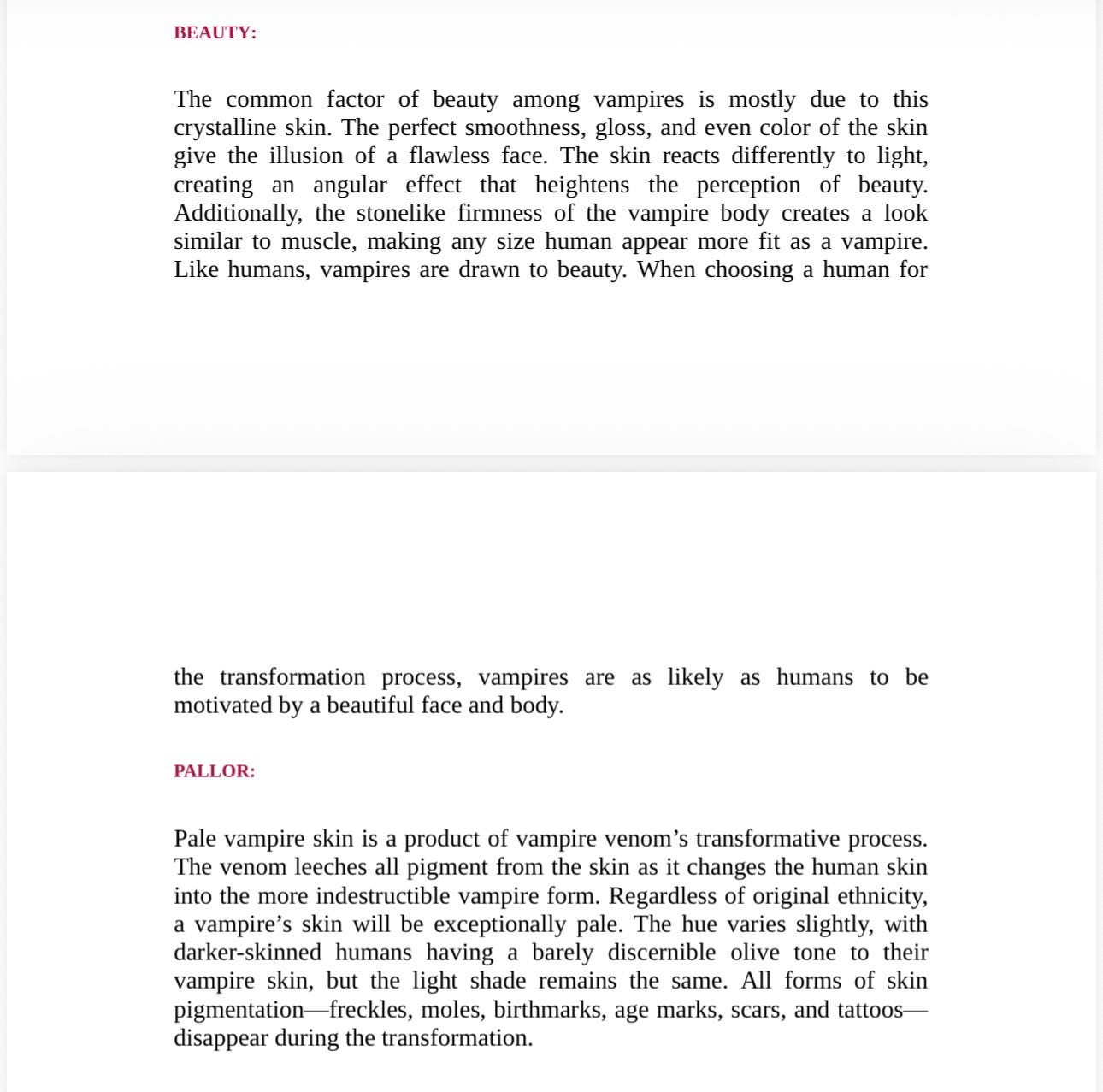
They cringed at Jasper being a proud Confederate soldier and Edward's obsessiveness with Bella, which, to some, bordered on manipulative and stalkerish. Readers have also pointed out that the pale-skinned Cullens were a device for conflating ideal beauty standards with whiteness. Meyer wrote in an illustrated guide in 2011 that "regardless of original ethnicity," venom from the transformation process "leeches all pigment" and that "beauty among vampires is mostly due to this crystalline skin."
Others called out the books' violent and animalistic depiction of Indigenous communities, especially the Quileute Tribe, the inspiration for Meyer's werewolf pack.

Celebrating 'Twilight' is complicated for many
Sarah Elizabeth Gallagher loves "Twilight" – really loves it. She also criticizes it often on her TikTok account that boasts almost 400,000 followers. Gallagher's obsession with the series prompted her to write the book "Why We Love (And Hate) Twilight."
"When I say the word 'hate,' it's so embedded with love," Gallagher says. "It's really about saying I believe 'Twilight' is important enough to be criticized legitimately."
Ajhée Nolen, a reader from Michigan, also used to make videos analyzing and criticizing "Twilight." She loves the series too, but as a Black woman, she couldn't ignore Jasper's Confederate heritage. But she stopped creating videos – her comments were full of "vitriol," with fans attacking her for her appearance and race. She also received death threats for saying she was Team Jacob, Nolen says.
"People would just get really upset and be like 'You’re trying to ruin 'Twilight,' you're trying to make it that deep,'" Nolen says. To her, it is that deep. "This is a cultural phenomenon. 'Twilight' literally changed the way we viewed YA literature."
It also changed the way young women viewed themselves, particularly those who romanticized Edward and Bella's relationship.
As some fans got older, Edward's obsession with Bella seemed more controlling than swoonworthy. Jacob, too, kisses Bella without her consent, after which she punches him. And Nolen takes particular issue with the disproportionate violence the women of "Twilight" face compared to their male counterparts – sexual assault, attempted suicide and horrific near-fatal childbirth.

Fans and readers criticize Indigenous representation in 'Twilight'
Meyer based the shape-shifting werewolves on the real-life Quileute Tribe of La Push, Washington.
"The Tribe whose culture was represented for background fodder in the teenage love story, has seen little benefit," reads a passage on "Truth versus Twilight," a website created by the Burke Museum of Natural History and Culture and the Quileute Tribe.
Meyer's fictional Quileute Tribe contains glaring stereotypes: members shape-shift into wolves and become violent in the process. While the Cullens are a tight-knit, polished and wealthy family, the wolfpack has modest homes and broken families, and are usually fighting shirtless or with tattered clothes. They "imprint" on future romantic partners – like Jacob on Bella's young daughter, Renesmee – giving way to misconceptions of grooming, pedophilia and arranged marriages.
Even the Quileute origin story, which Meyer uses as the origin for their wolfiness, "differs greatly," according to "Truth versus Twilight."

Naomi Darling, an Ojibwe content creator who runs the Bindery publishing imprint Boozhoo Books, did not grow up interested in "Twilight." When her followers, used to her takes on Indigenous representation in books, asked her to give the series a try, she barely made it through the first book. Meyer is not the first, nor the last, white author to misrepresent Indigenous culture in literature, she says.
"When you have writers who write outside the culture, they're not familiar with the cultural norms, and then people who aren't from that culture will read it … that's going to be their only experience with Indigenous people, so they have no way of telling if that's an accurate representation or not," Darling says.
Instead, she recommends reading books by Indigenous authors including "Love is a War Song" by Danica Nava, "Buffalo Hunter Hunter" by Stephen Graham Jones and "Looking For Smoke" by K.A. Cobell, to name a few.
'Twilight' reduces Indigenous people to 'animalistic' stereotypes, readers say
Charlie Scott, a content creator from the Navajo Nation, loved The Twilight Saga growing up, but has since reexamined her relationship to the series over the "alarming" portrayal of Indigenous peoples.
"It reduces Indigenous peoples as being animalistic, as being savages," Scott says. "The way (Meyer) tried to justify it, too, (that) they were just spiritual warriors trying to protect their territory also leans into the mysticism of Indigenous peoples."
Meyer has been notably silent about the backlash, and her representatives did not respond to USA TODAY’s request for comment.
In a form of reparations, some "Twilight" fans donate regularly to the tribe's "Move to Higher Ground" fundraiser to relocate at-risk community facilities and future housing above flood zones in La Push. Gallagher makes a monthly donation and says she'll donate profits she earns from her book as well.
The Quileute Tribe has a list of FAQs on the mission site. One asks, "Is 'Twilight' helping with the funding?" The franchise's creators haven't offered, the site states.
The Quileute tribe declined USA TODAY's request for an interview on the basis that they don't participate in interviews about the "Twilight" series.
Does 'Twilight' still have a place in the conversation?
Gallagher points out that the fandom's ability to talk about shortcomings represents a productive way to converse and debate.
"We're able to build community off of this and all come together in the woods in Forks and celebrate this thing. But while holding that that's something that's meant so much to so many of us, also saying this could have been better," Gallagher says.

Cherish Danae, a reader from Texas, also holds her love and criticism of "Twilight" simultaneously. She even briefly lived in Forks, Washington, teaching and working at her "dream job" at Forever Twilight in Forks Collection museum. Earlier this year, she was invited to dinner with Meyer. Though she finds a lot wrong with the series, she still relished the opportunity to meet her.
"I don't know her as a person, I only can go off of what I experienced with her, so I feel strongly that a lot of things were maybe not intentional, but also out of ignorance," Danae says. "Living in Forks and being in such close proximity to La Push and being friends with people in the Quileute Tribe … the important thing for me is to recognize that while there are a lot of things that were wrong and even though they (may be) unintentional, they do have consequences."
Danae thinks she should speak out and apologize.

The series' impact will continue far beyond this year's 20th anniversary. Netflix is adapting an animated series for "Midnight Sun," Meyer's 2020 "Twilight" companion novel, as told from Edward's perspective. Scott thinks future adaptations present a chance for the series to challenge itself and grow in new ways, especially with respectful Indigenous representation.
"Twilight" was a "book for me to escape when I was a teenager," Scott adds. "It wasn’t a healthy book to escape, but it was a book that allowed me to escape. I have appreciation for that."
"However, I am an adult, many of us are adults. This is the 20th anniversary of 'Twilight.' And all of us need to have a tough conversation with our inner child about what this book really meant to us, but also what it really did to us."
Clare Mulroy is USA TODAY’s Books Reporter, where she covers buzzy releases, chats with authors and dives into the culture of reading. Find her on Instagram, subscribe to our weekly Books newsletter or tell her what you’re reading at [email protected].